
How to Get Rid of Damp Smells and Freshen Your Home

Last modified on: 03/09/2026

Knowing how to get rid of damp smell in house interiors starts with one distinction: the odour is evidence of moisture, not the source of it. Find and stop the water or condensation, dry the affected materials, then clean what can safely be cleaned. A fragrance, bowl of powder or open window may change the smell for a while, but it cannot repair a leak or remove hidden mould.
We’ve all been there – you walk into a room and immediately get punched in the nose with the olfactory equivalent of a right hook. “What is this”, you think to yourself while you’re looking for the source of thе taint that’s currently insulting your senses.
Damp smells aren’t uncommon. While having a miasma of stale air lingering in one’s home isn’t ideal, it’s nothing to be embarrassed about.
Unfortunately, damp odours are usually a symptom you have a much more serious problem – mould. The good news is both are relatively easy to treat. Though you’ll most likely have to make some lifestyle changes. Don’t worry – it won’t be anything too drastic.
Key takeaways
- A damp smell can come from condensation, a leak, wet furnishings, hidden mould or more than one moisture source.
- Cleaning surface marks without fixing the moisture allows the smell and mould to return.
- Hard surfaces and porous materials need different decisions; some mouldy absorbent items cannot be cleaned reliably.
- Ventilation, heating and dehumidification can help manage condensation and drying, but they do not repair leaks or structural defects.
- Odour absorbers may make a dry room smell better, but a returning smell is a reason to inspect again rather than add more fragrance.
Table of Contents
How to get rid of damp smell in house rooms safely
Begin with location, timing and visible clues. Does the smell become stronger after rain, bathing, cooking or drying laundry? Is it concentrated beside a window, under a sink, behind a wardrobe, around a washing machine or near a ceiling stain? The pattern helps separate everyday condensation from plumbing, roof, gutter, seal or drainage problems.
| Clue | Likely route to check | First action |
|---|---|---|
| Water beads on windows and cold walls | Condensation, weak extraction or cold surfaces | Use working extractors and vents, manage indoor moisture and check heating and insulation |
| Mark grows after rain | Roof, gutter, pointing, flashing or window defect | Document it and arrange building inspection or repair |
| Local patch near plumbing | Pipe, appliance, bath or shower leak | Stop the leak where safe and arrange repair before cosmetic cleaning |
| Musty cupboard, carpet or soft furnishing | Trapped humidity, previous spill or contaminated porous material | Empty the area, inspect behind it and assess whether the item can be washed and fully dried |
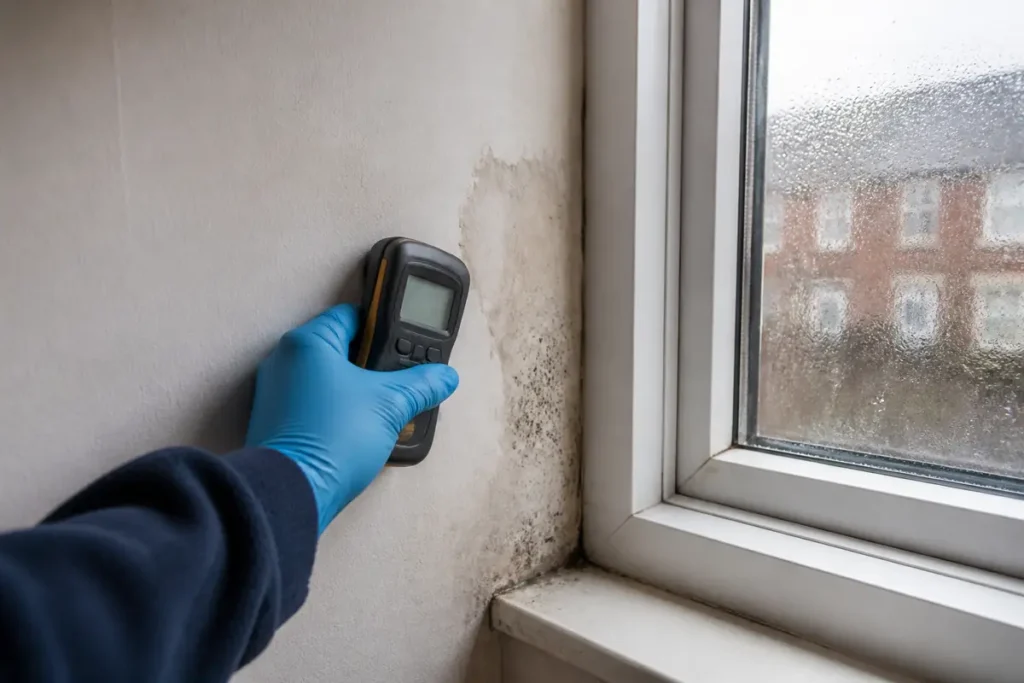
In a rented home, report damp, mould, failed ventilation and repair defects to the landlord or managing agent promptly and keep photographs and dates. Current UK damp and mould guidance says the underlying cause must be identified and addressed; removing surface mould alone does not prevent it returning.
How to get rid of a damp smell
A damp smell is like smoke – it’s a symptom, not a cause. Where there’s smoke, there’s fire. And where there’s damp odours, there’s mould. So before you can address the problem with the smell, first you need to deal with the mould.
Get rid of the mould
Mould can be a serious health hazard for you and your family. Fortunately, it’s not that difficult to remove. There are plenty of DIY methods you can use.
Current safety boundary: Small surface growth and extensive, hidden or recurring mould are not the same job. Government guidance recommends an appropriate mould-and-mildew product rather than treating bleach as a universal answer, protective equipment during removal, ventilation during and after the work, and qualified help for larger areas. Do not dry-brush or vacuum visible mould, and never mix cleaning products.
Identify the moisture source
Mould needs excess moisture like plants need dirt and water. If you encounter damp smells and mould, then you need to identify the source of this moisture.
Round up the usual suspects:
- condensation
- leaks
- lack of ventilation
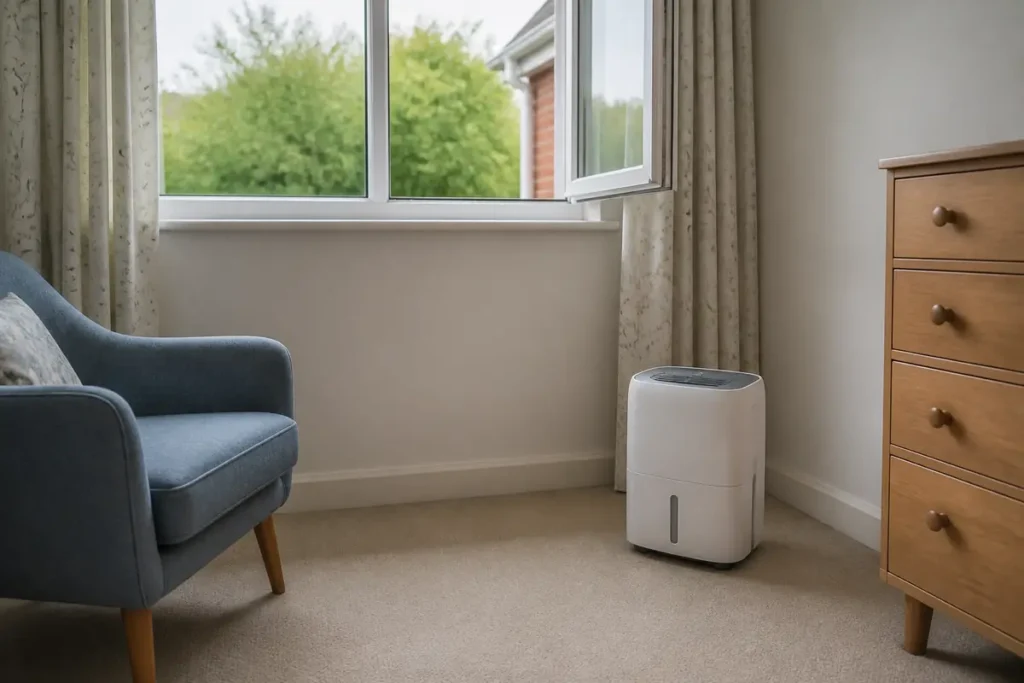
Identify the source of the moisture and fix it. You may want to think about purchasing a dehumidifier, as well. Though be warned – it will not solve your damp odour or mould problems on its own.
Also check cold external-wall corners and hard-to-reach places behind wardrobes and sofas. Leave a practical airflow gap where possible. In kitchens and bathrooms, use working extractor fans and keep internal doors closed while steam is being produced so moisture is not simply moved into the rest of the home.
DIY ways to remove mouldy smell
Once you cut the mould at the source, now it’s time to remove the damp odours. Dealing with smells isn’t as straightforward as cleaning a surface, so it will require a bit of finesse on our part. However, we’ve already tackled the difficult part so the rest should be a walk in the park.
There are several approaches you can take and, honestly, most of them work as well as the others so which one you choose will be a matter of preference of availability.
Air out the room
The first and foremost thing you need to do is air out the room. It won’t completely solve the problem, but it will make it less severe and, consequently, our other solutions more effective.
A jar of activated charcoal
Activated charcoal is a natural absorbent. Many people use it in their terrariums for its absorption of smells and toxins.
If you want to deal with your problem using this method, simply put an open jar of activated charcoal in the room. Change it every few days and the smell will go away.
Note: Keep away from children and pets.
This is a great solution because it’s easy, cheap, and requires almost zero involvement on your part.
Lemon freshness
This is the method with the highest “hands-on” approach.
First, you need to cut a couple of lemons in pieces, then boil them in water. Once that’s done, place the container in the room with the unpleasant odours.
Note: Don’t leave it unattended. Keep away from children and pets.
When the solution cools off, you can transfer it into a spray bottle and sprinkle it around. The whole process should reintroduce the smell of freshness into your home.
Baking soda
Baking soda is a natural deodoriser. So place a jar of baking soda in the room with the bad odour and the soda will absorb it. Make sure you place it as close to the source of the smell as possible. Change the soda in the jar once a week.
Cat litter
If you have a cat, then you know how good cat litter is at absorbing smells. So use some of your furry roommate’s litter in the room with the damp smell. But make sure your cat doesn’t mistake your efforts for a new litterbox location. Otherwise, you will have an entirely different set of problems on your hands. Try this approach at your own risk.
Coffee grounds
Coffee drinking in the UK is on the rise. If you’re one of the people who enjoy a good cup of coffee in the morning, then you’ll love this solution.
Put a bowl of coffee grounds into the room with the damp odour. Now your room will smell of coffee instead of staleness.
What odour absorbers can and cannot do
Charcoal, bicarbonate, cat litter, coffee and lemon may change how a room smells, but they do not prove that it is dry or free from mould. Keep loose powders and hot liquids away from children and pets, follow the product instructions, and do not spray lemon water or another homemade mixture over unknown paint, wallpaper, timber, textiles or electrical fittings. Boiling water also adds moisture to indoor air, so fragrance should never replace drying.
Clean, dry or remove affected materials
Wash removable fabrics only according to their care labels and dry them fully before returning them to the room. Inspect curtains, bedding, cushions, wardrobes, carpet backing and the washing machine seal if the smell follows laundry. A cleanable hard surface is different from absorbent plasterboard, ceiling tile, carpet underlay or soft furnishing that has remained wet or mouldy. Some porous items may need specialist assessment or disposal because surface wiping cannot reach contamination within the material.
You may also enjoy:

How Samyx Cleaning can help after the moisture source is fixed
An agreed Samyx One-Off Cleaning can help with routine cleaning after the leak, building defect or condensation problem has been addressed and the area is safe to clean. Tell the office about visible mould, affected materials and recent water damage before booking. Standard domestic cleaning does not diagnose damp, repair a building, remediate extensive mould or guarantee removal of odour from contaminated porous materials.
Book a One-Off Deep Clean
Enter your postcode to view our rates and availability in your area.

Frequently asked questions
-
What kills the smell of damp in a house?
No single deodoriser solves every damp smell. Stop the leak or condensation source, dry the building materials and contents, then clean or remove affected material safely. An absorber may reduce the remaining odour in a dry room, but it is not remediation.
-
How long does it take for a damp smell to go away?
There is no reliable fixed time because drying depends on the moisture source, material, temperature, airflow and extent of water damage. The smell should not be used as the only test. If it returns or the material stays damp, arrange further investigation.
-
Why does my house smell musty when I cannot see mould?
Mould or wet material can be hidden behind furniture, wallpaper, flooring, cupboards or wall finishes, but a musty smell can also follow a leak without visible growth. Check the timing and location, inspect safely and report persistent damp in a rented home rather than masking it.
-
Can a cleaning company remove damp and mould?
A cleaner may be able to clean a small, accessible hard-surface area within an agreed and safe scope. Cleaning cannot repair leaks, insulation, ventilation or structural defects, and extensive, recurring, hidden or porous-material mould may require an appropriate qualified specialist.
Important: This is general household cleaning guidance, not a building survey, mould-remediation plan or medical diagnosis. Damp and mould can affect health, and risk is higher for some people, including those with respiratory conditions, allergies, weakened immunity, older people and young children. Seek medical advice for health concerns. Photograph and report damp in rented homes, fix or arrange repair of the underlying moisture source, follow labelled product and protective-equipment instructions, ventilate during and after permitted cleaning, and never mix cleaning products. Leave large, recurring, hidden or uncertain mould and contaminated porous materials to an appropriate qualified professional.
Conclusion
Dampness is a common problem in London and across the UK. And where there’s dampness, mould and damp odours aren’t far behind.
Luckily, while those issues require a bit of elbow grease, they’re not that difficult to deal with. All you need is the right knowledge.

Author: Atanas Dzhingarov
Hi, I’m Atanas - brand consultant and writer. I’m helping Samyx Cleaning create the best cleaning company blog on the Internet. Join us on our journey and learn how to live a cleaner, healthier, happier life in the process.
Discover more of our cleaning secrets: